When Hormone Rhythms Shift: Why Food Choices Start to Matter More
Understanding estrogen transitions and everyday nourishment
As estrogen levels gradually shift, many women begin to notice subtle changes in how their body feels before menstruation. What once felt manageable may now seem more intense, longer-lasting, or harder to interpret. This is not a sudden malfunction but often a reflection of a changing hormonal rhythm. During these transitions, nutrition can act as a stabilizing influence—not by overriding biology, but by supporting how the body processes and adapts to hormonal fluctuation.
For a broader nutritional framework around estrogen transitions, see Nutrition for Women Over 30: Easing Estrogen Decline, PMS & Menopause Symptoms.
The Hormonal Rhythm Behind Stronger PMS
Estrogen as a signaling regulator
Estrogen influences mood, fluid balance, sleep patterns, and inflammatory signaling. When its cyclical pattern becomes less predictable—often in the years leading up to menopause—the body may respond with:
- heightened breast tenderness
- more noticeable bloating
- increased irritability or emotional sensitivity
- disrupted sleep before menstruation
These shifts do not occur in isolation. Estrogen interacts with cortisol and insulin, forming a networked hormonal rhythm. If you want to understand how these hormones influence one another through nutrition, the guide Cortisol vs Estrogen vs Testosterone: Nutrition-Based Hormone Balance Guide explains this interplay in more depth.
Over time, many women describe a pattern: cycles feel slightly different each year, PMS signals linger longer, and recovery feels slower. This gradual shift reflects the body adapting to new baseline hormone dynamics.
Why Soy and Flaxseed Are Often Discussed
Plant compounds and estrogen receptors
Soy and flaxseed contain natural plant compounds known as phytoestrogens. These molecules have a structure that can gently interact with estrogen receptors. They do not replace estrogen, nor do they override hormonal production. Instead, they may contribute to a more balanced receptor response during fluctuations.
Flaxseed also provides lignans and fiber, which support digestive processing of hormones. Soy contributes isoflavones and plant protein, which fit naturally into balanced meals. The key is consistency and dietary context rather than intensity.
These foods are not corrective tools. They function as part of a wider nutritional rhythm.
Pattern Recognition: When the Body Feels Different
Many women begin noticing:
- PMS symptoms lasting longer than before
- mood changes that feel less predictable
- increased sensitivity to stress during the luteal phase
- slower return to baseline after menstruation
This pattern often unfolds gradually over years rather than months. Recognizing the rhythm matters more than reacting to a single cycle.
How to Respond in Practice
Support, preserve, protect
Support hormonal rhythm
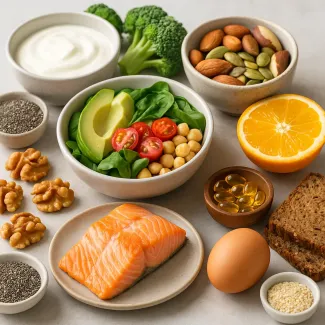
Meals that include steady protein, fiber, and healthy fats may help maintain stable metabolic signals. Soy-based foods and ground flaxseed can fit into this pattern without becoming the sole focus.
Preserve digestive balance
Because estrogen is processed through the liver and gut, maintaining digestive regularity becomes more relevant with age. Hydration, plant fiber, and consistent meal timing can contribute to this rhythm.
Protect recovery cycles
Sleep and stress regulation influence estrogen signaling. High evening stress may intensify PMS perception. Observing patterns between stress-heavy weeks and symptom intensity can offer useful insight.
What often overloads the system
- Irregular eating patterns
- Excess refined sugar combined with low protein intake
- Chronic stress without recovery periods
- Inconsistent sleep schedules
These factors do not cause PMS, but they may amplify how symptoms are experienced.
Everyday habits that matter indirectly
- Eating at relatively stable times
- Including plant diversity during the week
- Gentle movement rather than extreme fluctuations
- Allowing recovery days during high-symptom phases
The body tends to respond to rhythm more than intensity. Small, consistent habits often feel more stabilizing than abrupt dietary shifts.
Thinking in Terms of Long-Term Adaptation
Hormonal transitions rarely announce themselves loudly at first. They tend to evolve. Estrogen may fluctuate more dramatically before gradually declining. The goal is not to control every shift but to build a nutritional environment that feels supportive across cycles.
For broader practical orientation about symptom-based strategies, see Natural Remedies for PMS and Menopause: What Really Works in 2025?. That article explores complementary lifestyle perspectives without narrowing the focus only to diet.
A Calm Way to Understand the Shift
Stronger PMS during estrogen transitions often signals adaptation, not failure. Soy and flaxseed are not solutions in isolation, but they can belong to a dietary pattern that respects hormonal rhythm. Observing changes over months rather than reacting to one cycle allows for more measured decisions.
When nutrition supports hormonal timing, digestion, and recovery together, the body often feels more coherent—even as it moves into a new phase of life.
FAQ questionIs it normal for PMS to feel stronger in my late 30s even if my cycle is still regular?
It is often mentioned that PMS can feel different before cycles become irregular. In this context, people usually notice that mood shifts, bloating, or sleep changes feel slightly more intense than they did a few years earlier. This is frequently connected to subtle fluctuations in estrogen rather than a complete decline. Over time, it can be observed that the body responds more sensitively to hormonal peaks and dips, even when the calendar cycle appears predictable.
FAQ questionDo soy foods really “act like estrogen” in the body?
Soy contains plant compounds that are structurally similar to estrogen, but they are not identical to human hormones. It is often explained that these compounds interact gently with estrogen receptors. In everyday life, it makes sense to think of soy as part of a broader dietary pattern rather than as a substitute for hormones. The context of the whole diet, stress levels, and sleep habits tends to matter more than a single ingredient.
FAQ questionWhat if I already eat healthy but still notice stronger mood swings before my period?
Even with a balanced diet, many women observe that emotional sensitivity increases during certain phases. This is often associated with how estrogen interacts with stress hormones and sleep quality. In daily life, it can be helpful to reflect on rhythm rather than perfection: consistent meals, adequate rest, and realistic expectations of productivity during the luteal phase often shape how symptoms are experienced.
Editor’s note: In practice, it is interesting how often people first notice emotional changes during busy or high-pressure weeks, rather than during calm periods. The hormonal shift may be subtle, but the lifestyle context can amplify it.
FAQ questionIs ground flaxseed better than whole flaxseed for hormonal support?
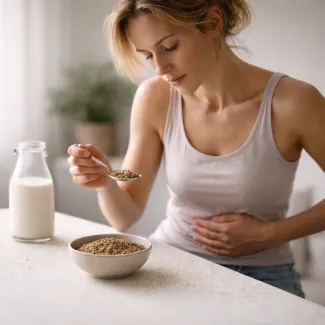
Whole flaxseed passes through the digestive system differently than ground flaxseed. It is often mentioned that ground flaxseed allows the body to access its lignans and fiber more effectively. In such a context, people usually include small amounts regularly in meals rather than relying on occasional large portions. Over months, the pattern of inclusion tends to matter more than intensity.
FAQ questionIn the U.S., many women use soy milk daily — could that be too much?
In American dietary habits, soy milk is commonly used in coffee, smoothies, and cereals. In everyday life, it makes sense to consider variety rather than exclusivity. Rotating plant proteins and including diverse fiber sources is often associated with a more balanced nutritional rhythm. Soya foods are generally discussed as part of a broader pattern, not as a dominant element.
Editor’s note: From an editorial perspective, it is noticeable that concerns about “too much soy” often arise online rather than from lived experience. What tends to matter more is dietary diversity and overall consistency.
FAQ questionHow long does it take to notice if dietary changes influence PMS?
Hormonal patterns unfold gradually, and responses to nutrition are rarely immediate. Over time, people may observe small shifts in energy stability, digestion, or premenstrual comfort. In everyday life, it has meaning to observe trends across several cycles rather than drawing conclusions from one month. Hormonal adaptation is typically experienced as a process rather than a quick shift.