When Gut Support Starts to Matter More Than It Used To
Why everyday digestion and immune balance feel different after 30
In your twenties, digestion often felt automatic. You could eat late, skip meals, or switch routines without much consequence. After 30, small shifts start to linger longer — a heavier feeling after meals, less predictable energy, or the sense that your immune system reacts more slowly than it once did. These changes are often brushed off as “normal aging,” yet they usually reflect a quieter transition happening inside the gut.
At the center of this transition is the gut–immune axis — the close relationship between the digestive system, microbial balance, and immune signaling. This relationship doesn’t break with age, but it becomes more sensitive to rhythm, stress, and consistency, especially from the mid-30s onward.
How the Gut–Immune Axis Evolves With Age
From resilience to responsiveness
The microbiome — the ecosystem of bacteria living in the digestive tract — changes gradually across adulthood. Diversity may narrow slightly, while certain strains become more dominant. At the same time, the immune system relies increasingly on clear signaling rather than fast reactions.
Hormonal shifts, particularly involving cortisol, insulin sensitivity, and sex hormones, subtly influence digestion. The nervous system also plays a role: stress signals travel directly to the gut, affecting motility, appetite cues, and immune readiness. What once felt like minor stress may now show up as digestive tension or low-grade fatigue.
These shifts don’t indicate dysfunction. They suggest the body now responds better to supportive conditions rather than extremes.
Gut-Healthy Foods as a Daily Signal
Not nutrients alone, but context
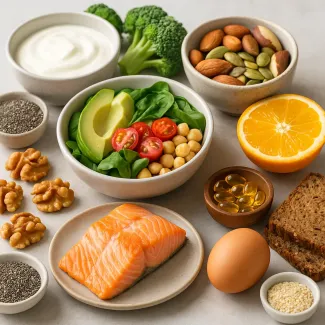
Gut-supportive foods are often described in lists — fermented items, fiber-rich plants, healthy fats. What matters more after 30 is how these foods signal safety and stability to the body.
Meals that support microbiome balance tend to share a few quiet characteristics:
- Consistency rather than variety overload
- Gentle textures that feel easy to digest
- Natural fibers that feed beneficial bacteria without irritation
- Fats and proteins that slow digestion slightly, supporting immune signaling
This doesn’t mean strict rules. It means noticing how the body responds over time, not meal by meal.
For readers interested in a broader contextual overview, there is also an article on 7-Day Gut Reset: Natural Cleanse Diet for a Healthier Digestive System, which explores digestive rhythm and reset concepts without framing them as solutions.
Daily Life Signs of Microbiome Strain
Subtle, cumulative signals
After 30, gut imbalance rarely announces itself dramatically. It tends to appear as patterns:
- Energy that dips earlier in the day
- Immune responses that feel slower or inconsistent
- A sense that digestion depends heavily on routine
- Skin or mood fluctuations that seem loosely connected to food or stress
These signs are not problems to fix but signals to interpret. They often reflect how well daily habits support microbial diversity and immune communication.
Timing also plays a role. When meals are irregular or rushed, the gut loses predictable cues. For a deeper look at this aspect, see Best Meal Timing to Improve Gut Health and Digestion, which focuses on rhythm rather than restriction.
What Can Be Done in Real Life
Orientation, not intervention
Supporting gut health after 30 is less about adding more and more strategies, and more about removing friction from daily life.
What often helps:
- Maintaining regular eating windows that the body can anticipate
- Choosing foods that feel calm and familiar, not constantly novel
- Allowing digestion to happen without multitasking or urgency
- Observing how stress, sleep, and environment affect appetite and comfort
What usually helps less:
- Frequent dietary overhauls
- Treating every digestive signal as something to correct
- Expecting immediate feedback or visible outcomes
This approach emphasizes patience, observation, and trust in gradual adaptation.
For those navigating changes later in life, there is also contextual reading on Simple ways to boost gut health and immunity naturally after 50, which reflects how priorities shift with age.
Fiber, Comfort, and the Slower Digestive Pace
When support becomes about ease
As digestion naturally slows with age, fiber tolerance can change. Some people notice that what once felt energizing now feels heavy, while others benefit from gentler forms of fiber.
Rather than focusing on correction, the more useful perspective is comfort and regularity. Digestive ease supports immune balance indirectly by lowering background stress in the nervous system.
For readers seeking orientation around this topic, Relieve constipation with fiber supplements that support gut health offers context without framing fiber as a cure.
Gut Health as a Long-Term Conversation With the Body
Balance over intensity
After 30, gut-healthy foods are no longer just fuel. They become daily signals of safety, rhythm, and care. The immune system listens closely to these signals — not for perfection, but for consistency.
When digestion feels supported, the body often responds with quieter energy, steadier immunity, and fewer fluctuations that demand attention. Not because something was fixed, but because the environment became easier to live in.
This is the shift that defines adult gut health: less urgency, more awareness, and a growing respect for how small, repeated choices shape long-term balance.